Industry newsletter The Exact Edition has been documenting changes in the ever-evolving sphere of magazine publishing since 2023.
Even in this relatively limited lifespan, notable developments in this space have emerged. A resurgence in print titles relaunching, diversification in content distribution, and a honing down on niches, are some key developments.
2025 has placed interesting nuances to these larger scale developments. Learn what’s happened — and what will happen in magazine publishing below.
(If you like what you’re reading, sign up to The Exact Edition for more.)
Discount Carefully
How publishers became discount scammers (Baekdal.com)
The media industry is very much within a subscription era. However, getting people to buy high-quality media online can be tricky, especially with the amount of information available for free.
Discounts have been an effective way to bring people on board. Within — and beyond — magazine publishing, there are industries dedicated to designing effective pricing structures that acquire and retain customers.

However, as media analyst Thomas Baekdal posits, there are boundaries to discounting. He showcases some distinctive examples of “discount madness”, where news publishers offer extreme reductions in price. Baekdal analyses how this sacrifices the long-term value proposition of the media product — and goes as far to exploit the customer.
The observation underscores how discounts must balance acquiring customers with preventing churn.
Print Renaissance
Print magazines are having a moment. Who’s buying them?
Print publications have experienced a notable resurgence of interest in the last year. Many high-profile magazines have resumed or increased their print output.
One of these titles, Bloomberg Businessweek, is explored in a Marketplace article — Amanda Mull is quizzed on the organisation’s reinvestment into physical print products.

A key insight — especially pertinent for the prospective audience of Bloomberg — is that print holds potential for a high-end, sophisticated market of consumers. This, in turn, makes advertising lucrative and desirable.
But print doesn’t have to be an elite pursuit for readers or sponsors. It can also be a compelling “hero” product to anchor subscription and membership offerings. This offers a niche audience segment — something also appealing to advertisers.
Under The Influence
Journalism needs to adapt to the rise of news influencers
Social media has caused a seismic shift in how society consumes media and information at large. Publishers have had to evolve to catch up to this information revolution. They’ve had to evolve even more since video-sharing platforms such as TikTok and Instagram reels have grown in popularity — particularly in regard to the role of the “influencer”.
Journalists and influencers are two disseminators of information — yet one is a role that aims for objectivity, the other subjectivity. The journalist speaks to the reader/viewer, whilst the influencer speaks with them. The journalist represents a media brand — the influencer is their own media brand.

Despite these inherent differences, journalists should explore ways to mimic influencers’ strategies to engage audiences — and bring their foundational skills with them, says Gregory Galant, cofounder and CEO of Muck Rack.
He notes “think of the rise of news influencers as not a threat to journalism but a call to action […] if the media industry can adapt, we’ll be able to ensure that real news remains the go-to source of trusted information.”
There is a lot of sense in using tools for making journalism discoverable in the modern technological age. This can help ensure media brands are accessible, trusted and popular for years to come.
Customisable Consumption
Business Insider and Time pose new visions for AI news
In a popular LinkedIn post, Jovan Protic (Axel Springer’s AI expert), offered a glimpse into the future of media.

Content would be available in customisable forms. Not only could articles be read, but they could be listened to, watched, or even interacted with via chatbot.
Both Business Insider and Time experimented with similar applications of AI-driven article functions.
The latter example, from Time, featured interactive AI for users to ask the article questions on the Person of the Year profile on Donald Trump.
Some analysts are still skeptical of the practicality of these developments. Brian Morrissey, for example, detailed that AI experiments such as Time’s are “marginally useful, although I’d still classify it as more marketing activation than product change.”
It will be intriguing to see how these features develop and whether readers value them in the long term.
Learn More
For more information about trends such as these, sign up to The Exact Edition.
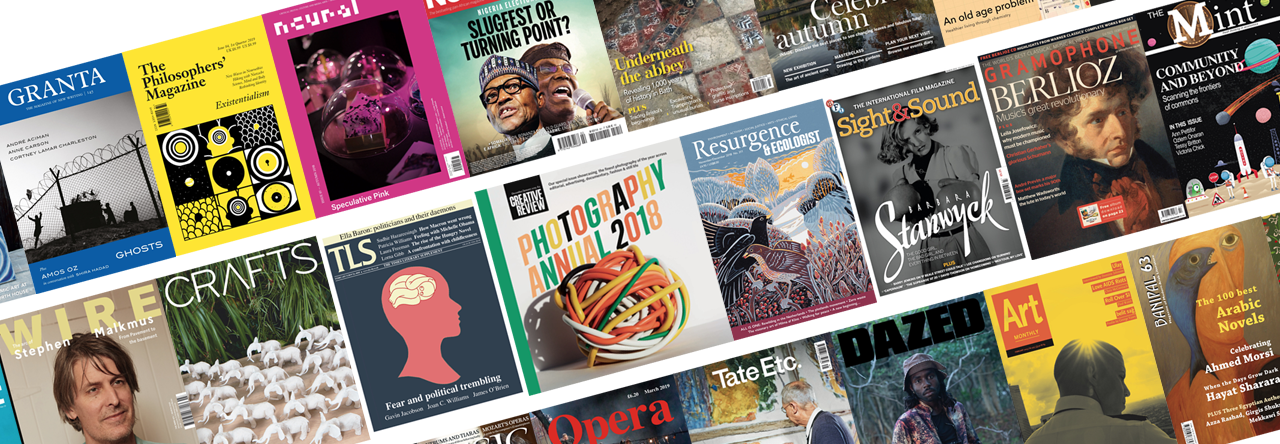
Exact Editions is the premium magazine platform for readers, libraries, and publishers. Creating, selling and streaming fully-searchable access to archival and ongoing digital editions, it is proud to work with hundreds of magazine publishers, including The Times Literary Supplement, DAZED, and The Spectator.
For more information, please visit: https://publisher.exacteditions.com/
Leave a Reply