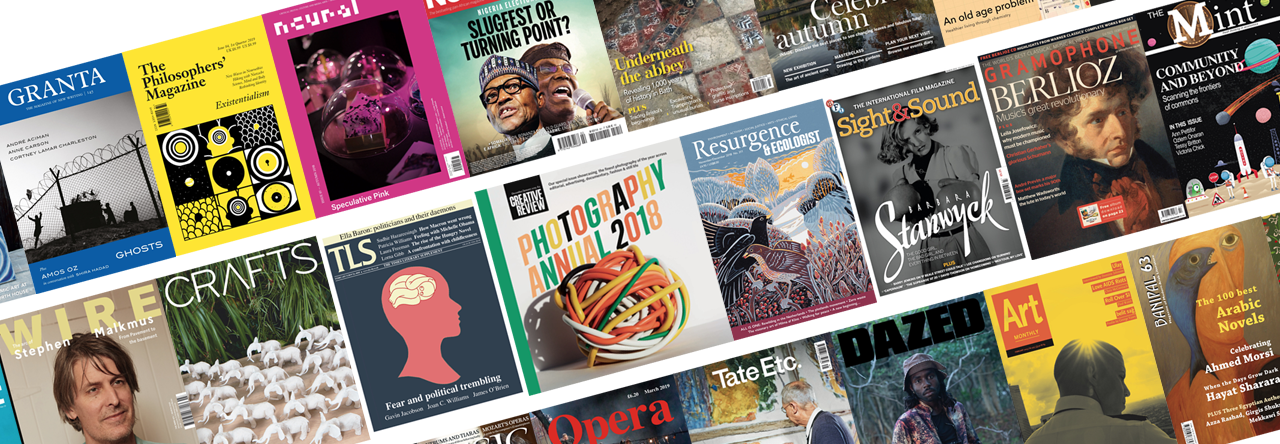
April 15 marks World Art Day: an occasion described by UNESCO as “a celebration to promote the development, diffusion and enjoyment of art”.
It’s no coincidence the event falls on April 15th — this, after all, was the birthday of Leonardo da Vinci, a symbol of art’s expressiveness and boundless potential.
As a company which prides itself on the presentation and preservation of magazine archives spanning centuries, World Art Day marks an excellent opportunity to consider the importance of art magazines, as well as how digital technology is refining both their form and function.
‘What can an art magazine do?’
Art magazines not only promote, document and critique art, but serve as a nexus for a larger cultural community. Artists, critics, collectors, curators, and institutions can intersect and reflect larger cultural issues and critical dialogue.

This function is captured in a 2009 issue of C Magazine, when then-editor Rosemary Heather asks “What Can An Art Magazine Do?”.
In looking at how the art magazine captures the engagement between artwork and criticism, Heather writes:
paintings (and, by extension, all artworks) can be said to have their own “mysterious coordinates,” this might explain why the work of finding out what they are, and trying to articulate this identity, is a perpetual task-one for which an art magazine is uniquely suited.
In what was her final issue as editor of C Magazine, the issue — accessible to read here — epitomises the joyousness of this search for “mysterious coordinates”.
‘Interdisciplinarity as an attitude’
As art reflects and asserts back cultural and societal ideas, the digital age has led to a refinement of an art magazine’s function.
Flash Art — a renowned “detector of tectonic shifts in the visual arts” — explained in an 2020 issue (accessible here) that the editors questioned the fundamentals of what it is to run an art magazine.

Asserting “Interdisciplinarity as an attitude”, Flash Art’s editors discussed a renewed focus on innovation “integrated with and enriched by our digital platform”.
This demonstrates how the digital world redefines not only art itself but its documentation, preservation and critical treatment.
‘Mysterious coordinates’
Exact Editions have a particular connection to the concept of “interdisciplinarity” in art’s interaction and intergration with digital forms. Our publishing platform offers a “print replica” format — reproductions of magazines, arranged precisely as intended by publishers

One could argue that the ad-free platform offers the closest digital reflection of the unique experience of reading a magazine. Not only this, but the digital publishing technology allows intuitive access to rich, historical digital archives that span decades and even centuries.
On World Art Day, this enhanced means of accessibility can help us not only better locate the “mysterious coordinates” of art but also develop the vessel through which we perceive and understand them.
Learn More!
Exact Editions has shared the full digital issues referenced in this blog, accessible below:
**Reading Room links to the magazines will expire on 15 July 2024.**
Both C Magazine and Flash Art are also in in the Applied Arts institutional collection, available to digitally access through Exact Editions’ IP-authenticated and multi-user technology for universities, libraries, schools, galleries & museums.
You can also find out more on our website: https://institutions.exacteditions.com/
Leave a Reply